News
The cleric who wanted Dirac kept out of Westminster AbbeyThe struggle to have Dirac commemorated in Westminster Abbey lasted several years, as Graham describes in The Strangest Man. According to the late physicist Dick Dalitz, who led the group that campaigned for the commemoration, the main obstacle was the Dean of Westminster, who objected that Dirac had been a ‘militant atheist’. …

Michael Mayne, Dean of Westminster Abbey (1986-1996)
Meeting a MasterGraham spent yesterday at the University of Utrecht talking with one of the grandmasters of modern theoretical physics, Gerard ‘t Hooft. In a wide-ranging interview for Graham’s next book, the Dutch scientist reflected on the development of quantum field theory since 1970 and on his thinking about current physics.

In today’s edition of The Guardian, Graham reviews the new book by UCL Professor Jon Butterworth on life as a CERN experimentalist and the hunt for the Higgs boson.

Last summer in New York City, Graham recorded this interview about his new book with Steve Mirsky of Scientific American.
Read More
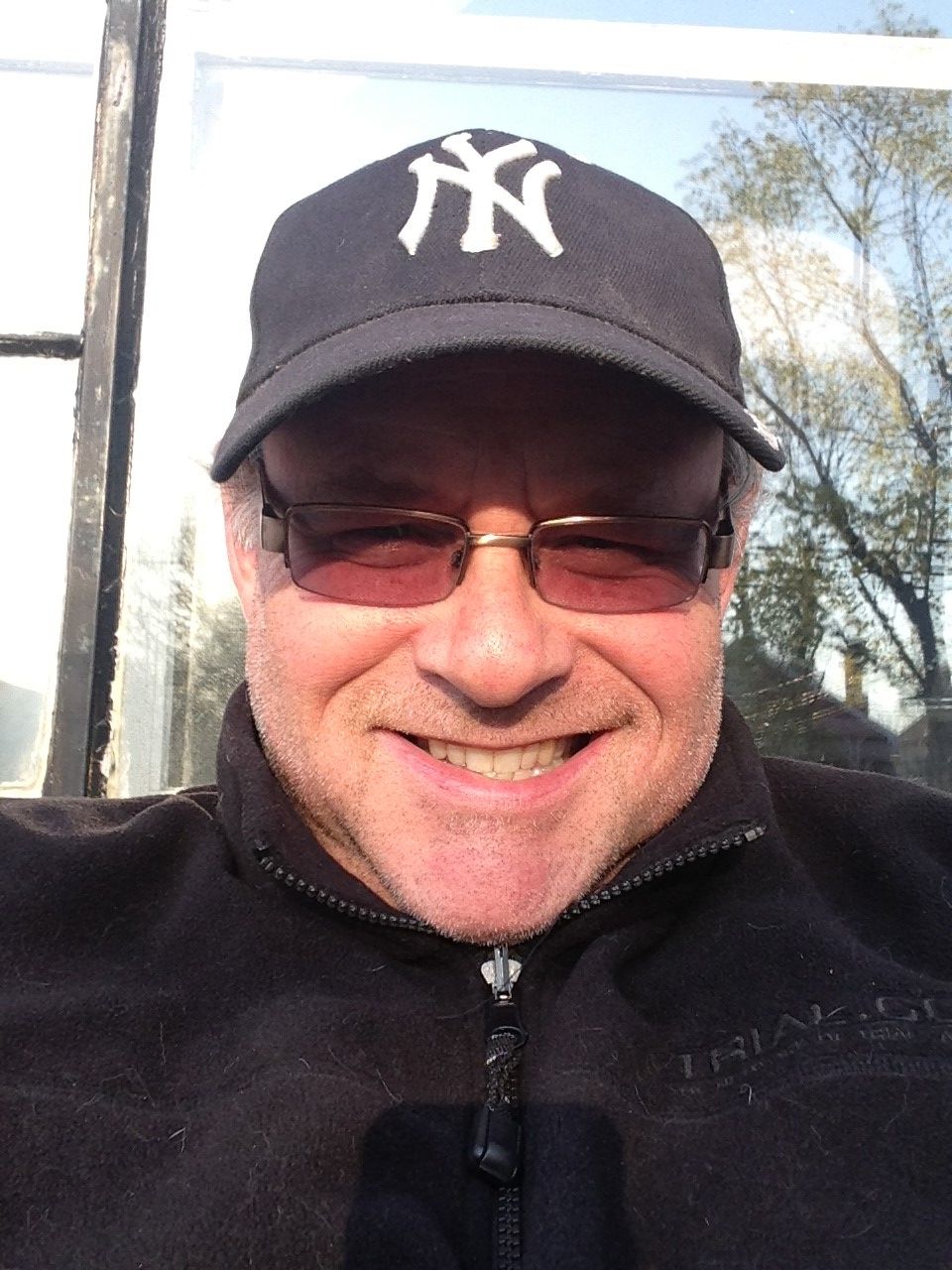
Selfie of Steve Mirsky, a life-long Yankees fan.
Dirac’s Quantum interviews now onlineDirac’s recollections of the history of quantum theory, given in five interviews with Thomas Kuhn and Eugene Wigner in 1962-3, are now available online.

1962, Yeshiva University
HG Wells – a hundred years since he coined ‘atomic bombs’Graham and Wells’ biographer Michael Sherborne talk with the Guardian’s literary editor Claire Armitstead about the 1914 novel The World Set Free, which introduced ‘atomic bombs’ and the concept of a catastrophic nuclear war.
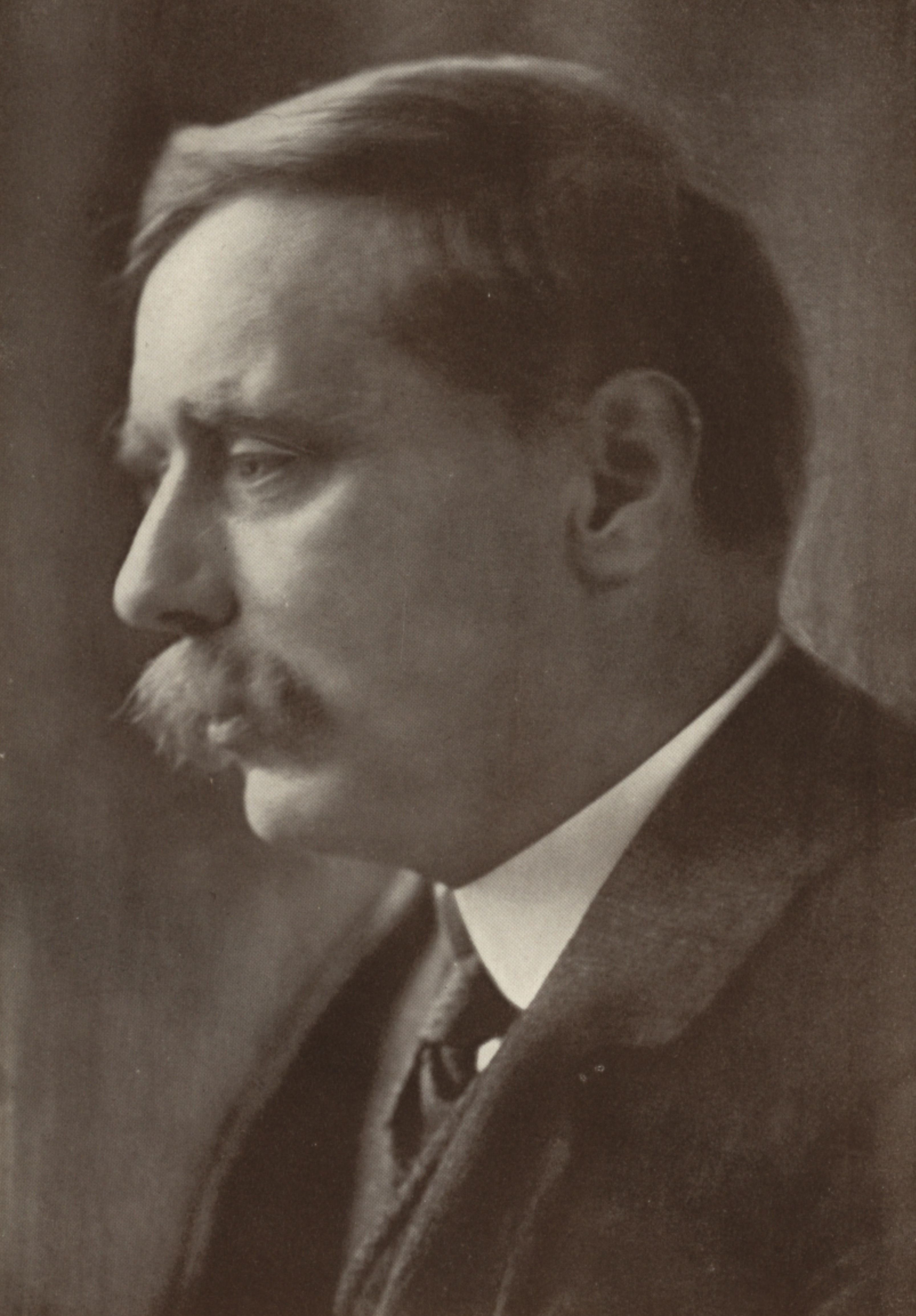
HG Wells, April 1914
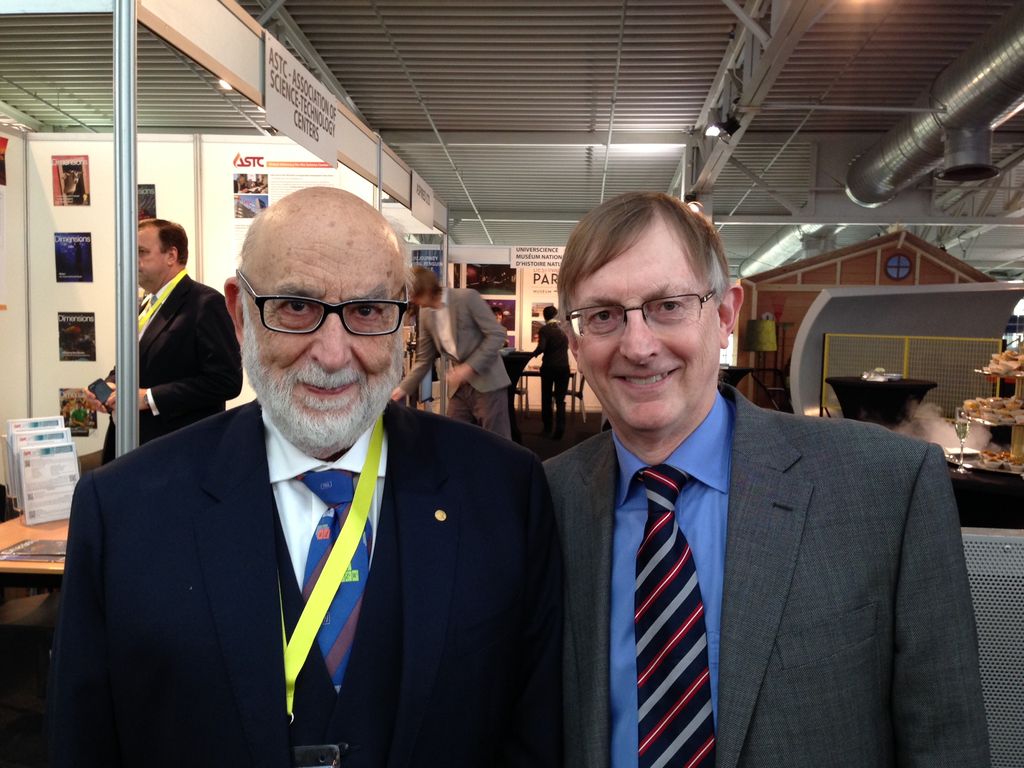
Nobel interview in BelgiumToday Graham interviewed Baron François Englert, winner with Peter Higgs of the 2013 Nobel Prize in physics, at the opening session of the Science Centre World Summit in Mechelen, Belgium.
A remarkable letter, written in October 1944 to Hitler by Max Planck, has recently come to light and been passed to Graham. In the note, the discoverer of the energy quantum pleads for the life of his son Erwin, who was involved in the attempted to kill Hitler three months before. Max Planck had already lost his eldest son, who was killed in the Battle of Verdun, during World War I.


New insights into the extraordinary Dirac family emerge in a remarkable letter by Rosemary McGregor-Wood, who lived directly opposite them in Cavendish Avenue.

Dirac family in c. 1946
Was Churchill a Nuclear Visionary?In Churchill’s last great speech in the House of Commons, on 1 March 1955, he claimed he had ‘tried to follow and even predict’ applications of nuclear science. In Graham’s first blog for the Huffington Post, he asks whether Churchill really was a nuclear visionary
Read More